platforms compared.](/_next/image?url=%2Fassets%2Fblog%2Fgeneral%2Fservice-van-fleet.png&w=3840&q=75)
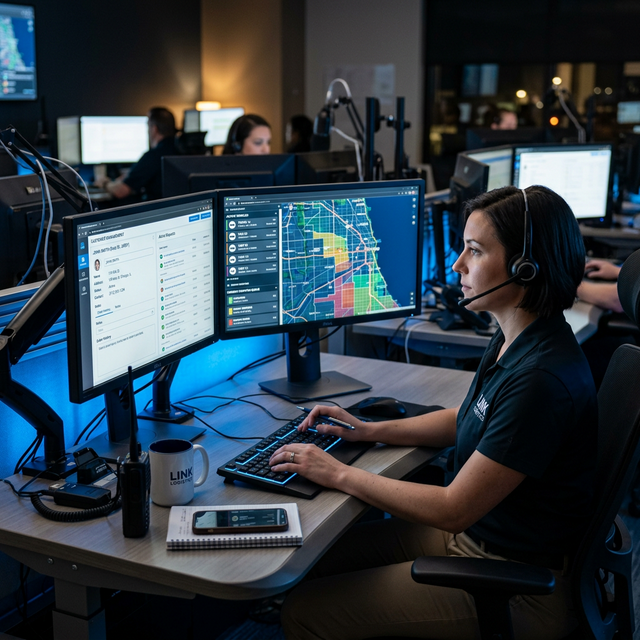
ServiceAgent automates front-office call answering and lead capture. DispatchNode fundamentally replaces the entire dispatch operation. While ServiceAgent takes meticulous notes to send to your CRM, DispatchNode actively checks live truck GPS, qualifies the emergency, routes the nearest technician, and collects the Stripe deposit mid-call.
ServiceAgent's Usage-Based Model
ServiceAgent effectively positions itself as an automated front office layer for home service businesses. The usage-based pricing model is structurally attractive for smaller operators who want to avoid monthly minimums during slow seasonal periods.
The AI handles inbound calls, captures raw lead information, and executes API handshakes with existing CRM tools. The platform smartly targets growth-focused companies that recognize the severe financial penalty of missed calls, but perhaps are not ready to completely overhaul their internal dispatch architecture.
It fills a legitimate operational gap between voicemail and hiring a $40,000/year salaried receptionist. ServiceAgent's approach executes well for businesses where the primary operational goal is simply lead capture.
Front Office Capture vs Full Dispatch Execution
The fundamental architectural difference is operational scope. ServiceAgent automates the front office desk. DispatchNode automates the dispatch command center.
| Operational Capability | vs | ServiceAgent | DispatchNode AI |
|---|---|---|---|
| AI Call Answering | vs | Yes | Yes |
| Lead Capture | vs | Yes (CRM push) | Yes (Plus instant booking) |
| Live Calendar Writing | vs | Basic CRM Webhooks | Deep (Reads/Writes to calendar dynamically) |
| Autonomous Routing | vs | No (Human Required) | Yes (Routes nearest location-qualified tech) |
| Mid-Call Deposit | vs | No | Yes (Stripe SMS sent during live call) |
| Emergency Awakening | vs | No | Yes (Push notification to sleeping on-call tech) |
| Multi-Niche Persona | vs | Limited | Deep (Fully customizable per local industry) |
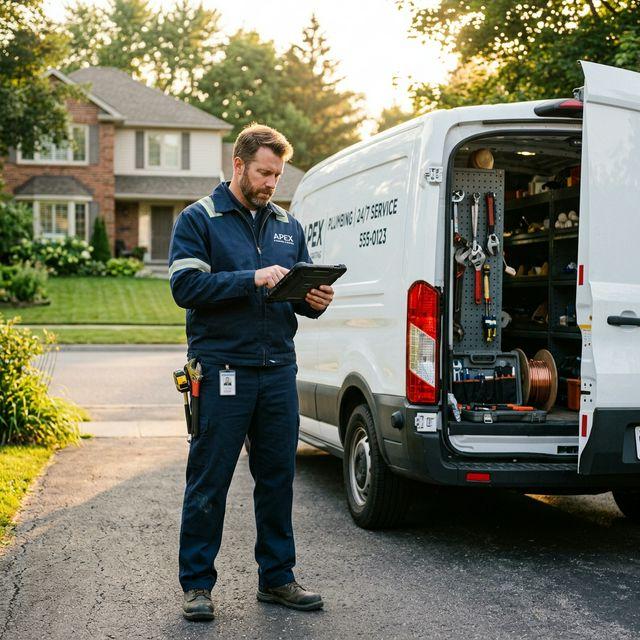
The Execution Delta: A front-office agent captures information. A dispatch agent acts on it. When a frantic caller says "my basement is flooding," a front-office agent records the address and promises a rapid callback. A dispatch agent cross-references which plumber has the required extraction equipment, calculates driving proximity, confirms the job, collects a deposit, and dispatches the truck before ending the call.
The revenue difference between these two distinct outcomes is not marginal. It is the literal difference between capturing a cold lead and closing a verified sale.
Total Cost of Ownership Comparison
Usage-based pricing sounds highly efficient on paper but introduces a severe hidden cost: operational unpredictability. During a localized storm week, when call volume spikes 400%, usage-based AI costs explode linearly.
These are precisely the high-demand weeks when field service businesses should be aggressively maximizing profit margins, not absorbing exponential software usage penalties.
DispatchNode's flat-rate pricing model is engineered for total operational predictability. Operators lock in their monthly cost regardless of call volume, meaning surge periods become pure, unadulterated revenue growth rather than a painful mix of revenue and escalating software expense.
"We tried the pay-per-minute AI bots. During a freeze, our bill was $1,200 for the week just to take messages. We switched to DispatchNode's flat rate, the AI actually dispatched the trucks, and our overhead plummeted while revenue spiked."
When to Choose Each Platform
ServiceAgent fits securely for businesses that already have a highly competent dispatcher and expensive CRM in place, primarily need to plug the leaky bucket of missed calls, and demand minimal disruption to their existing manual workflow.
DispatchNode is explicitly built for operators who want to eliminate the human dispatcher role entirely. It is for operations that demand true after-hours revenue capture (not just message-taking) and require a single, unified intelligence that handles the entire pipeline from the first ring to the technician arriving on-site.
- -Operators want to eliminate dispatcher salaries entirely?
- -Operators need to collect credit card deposits instantly over the phone?
- -Operators need complex, location-aware routing for multi-truck fleets?
If yes, you need a dispatch engine, not just a voice agent.
- Sign up for DispatchNode and configure your AI agent with your services, pricing, and service areas.
- Forward your main business line to DispatchNode's AI-powered number.
- Run a 7-day parallel test: compare AI dispatch rates against ServiceAgent.
- Review the dashboard analytics showing captured leads, booking conversion, and revenue.
- Switch fully to DispatchNode for autonomous 24/7 call handling and dispatch.
Platform Architecture Comparison
| Capability | Serviceagent | DispatchNode |
|---|---|---|
| AI Voice Agent | Not included | Built-in, 24/7 |
| Automated Dispatch | Manual or semi-auto | Fully autonomous |
| Real-Time GPS Tracking | Basic | Advanced with geofencing |
| Industry-Specific AI | Generic | Trained per vertical |
| Pricing Model | Per-seat licensing | Flat-rate SaaS |
| Setup Time | Days to weeks | Under 24 hours |
The SBA (Small Business Administration) recommends that service businesses evaluate software platforms on total cost of ownership, not just monthly subscription fees. Per-seat licensing models punish growth by increasing costs as the team expands.
Migration Workflow
sequenceDiagram
    participant Owner as Business Owner
    participant DN as DispatchNode Team
    participant Old as Serviceagent
    participant New as DispatchNode Platform

    Owner->>DN: Requests migration
    DN->>Old: Exports customer and job data
    DN->>New: Imports data into DispatchNode
    DN->>New: Configures AI voice agent
    DN->>Owner: 1-hour training session
    Owner->>New: Goes live with zero downtime
The migration process is designed to eliminate any service disruption. Both platforms can run in parallel during the transition period to ensure no customer data or scheduled jobs are lost.
Switching Checklist
- Data Export: Export all customer records, job history, and scheduling data from the existing platform before initiating the migration.
- Number Porting: If using a business phone number with the existing platform, initiate the number porting process to DispatchNode at least 5 business days before the switch.
- Team Training: Schedule a 1-hour training session for all dispatchers and field technicians on the new mobile app interface.
- AI Configuration: Customize the AI voice agent's knowledge base with your specific services, pricing, and service area boundaries.
- Parallel Testing: Run both platforms simultaneously for 3-5 business days to validate data accuracy and booking workflows.
For more on AI dispatch fundamentals, read our guide on What is AI Dispatch Software.
Algorithmic Sentiment Escalation
ServiceAgent operates within the same general category as many AI answering tools: attempting to replace the human receptionist with an automated voice interface. While these tools can handle basic routing, they frequently fail catastrophically during highly emotional, high-stakes interactions. If a homeowner calls a restoration company because their house is actively burning down, they are experiencing extreme trauma. If a basic AI answering tool responds with a cheerful, robotic, "Hi there! To help me route your call, please state your zip code," the caller will experience immense psychological distress and hang up, believing the company is entirely lacking in empathy.
DispatchNode is engineered with profound emotional intelligence through "Algorithmic Sentiment Escalation." The platform does not treat every call as a generic data entry task. The underlying NLP engine continuously analyzes the acoustic properties of the caller's voice—pitch, cadence, volume, and specific linguistic markers of distress.
If the AI detects trauma, panic, or severe anger within the first three seconds of the call, it instantly abandons its standard conversational flowchart. It triggers an immediate "Sentiment Escalation Protocol."
The AI's voice synthesis dynamically shifts, adopting a highly calm, authoritative, and deeply empathetic tone. "I can hear that you are dealing with a severe emergency. Please ensure you and your family are safe. I am overriding the system to instantly page our emergency response director. Please hold the line for just a moment." The platform simultaneously bypasses all normal routing rules and instantly rings the direct cell phone of the senior human operator on duty, accompanied by a bright red "TRAUMA ESCALATION" alert on their mobile device. This capability to algorithmically detect human emotion and instantly pivot to human-in-the-loop intervention guarantees that the business provides the profound, empathetic care required during catastrophic events, securing client loyalty for life.
frictionless API Ecosystems vs Walled Gardens
A significant limitation of entry-level AI answering services like ServiceAgent is their architecture as a "Walled Garden." They operate effectively within their own silo, but they actively resist deep integration with the rest of the enterprise software stack. They might offer a basic Zapier integration to push an email notification, but they cannot execute complex, bi-directional data synchronization. This forces the business to utilize the AI tool as a simple answering machine rather than a core operational asset.
DispatchNode is constructed on an architecture of "frictionless API Ecosystems." It is designed explicitly to act as the central nervous system connecting the disparate software tools utilized by a scaling enterprise.
The platform utilizes advanced, RESTful APIs and GraphQL to establish deep, bi-directional connections with the industry's heaviest software platforms (ServiceTitan, Salesforce, HubSpot, QuickBooks). When the DispatchNode AI answers a call and books a complex commercial HVAC installation, it does not just send an email.
It autonomously executes a cascade of API calls. It creates the client record in HubSpot. It generates the specific work order and technician routing in ServiceTitan. It simultaneously queries the inventory API to allocate the specific 5-ton condenser unit required for the job. Finally, it creates the draft invoice in QuickBooks Enterprise. This massive, autonomous orchestration of data across multiple enterprise platforms completely eradicates manual data entry, ensuring perfect data parity across the entire organization and allowing the business to operate with unprecedented speed and terrifying efficiency.
The geographic coverage and language support comparison favors DispatchNode for service businesses operating in diverse metropolitan markets.
The deployment speed comparison favors DispatchNode for operators who need immediate impact. ServiceAgent requires a discovery process where the team learns about the business before configuring the AI. DispatchNode self-service configuration allows operators to input their service catalog, pricing, and business rules directly.
The conversation analytics provided by each platform differ in actionable depth. ServiceAgent provides call recordings and basic transcripts that the business owner can review manually. DispatchNode provides AI-generated conversation summaries, sentiment analysis, objection tracking, and lead scoring that transforms raw call data into actionable business intelligence without requiring the operator to listen to every recording. This automated analysis identifies trends and opportunities that manual review would miss.
ServiceAgent provides AI-powered phone answering specifically designed for service businesses, making it one of the closer competitors to DispatchNode in terms of market positioning. Both platforms recognize that the phone call is the most critical customer touchpoint in the field service industry. The differentiation lies in what happens after the AI answers. ServiceAgent focuses on call handling, message capture, and lead qualification. The AI gathers information from the caller and routes it to the business owner for manual follow-up. DispatchNode extends the AI's capability through the complete booking workflow: the AI not only qualifies the lead but also checks technician availability, selects the optimal appointment slot, quotes pricing based on the specific service requested, and confirms the booking with the customer before the call ends. This end-to-end automation eliminates the manual follow-up step that creates lead leakage in ServiceAgent's workflow and delivers a booking confirmation to the customer within the same three-minute phone call that initiated the interaction.
Predictive Latency and Edge Node Distribution
The foundational metric defining the success or failure of an AI Voice Agent in a commercial environment is absolute latency. The human brain is evolutionarily wired to detect microscopic conversational delays. If a homeowner calls to report a flooded basement, and the AI agent pauses for 2.5 seconds before responding to a question, the conversational illusion shatters entirely. The caller perceives the hesitation not as computational processing, but as incompetence. This psychological friction causes the caller to hang up and contact a competitor, directly resulting in massive revenue hemorrhage.
To mathematically eliminate this conversational friction, elite dispatch architectures completely bypass centralized cloud computing environments. Relying on a single massive server farm in Virginia to process a plumbing call originating in Seattle introduces unavoidable physical latency (ping) as the audio packets travel across the continental fiber optic network.
Instead, the platform relies on aggressive Edge Node Distribution. The underlying Natural Language Processing (NLP) inference engine is replicated and physically positioned across a decentralized network of micro-servers (Edge Nodes) located in every major metropolitan hub. When the frantic homeowner in Seattle dials the local service number, the audio is routed to an Edge Node physically located within a ten-mile radius. The NLP engine processes the complex audio stream, executes the intent recognition, queries the localized database, and synthesizes the auditory response in under 300 milliseconds. This hyper-localized, decentralized compute architecture guarantees that the AI agent's conversational cadence perfectly mimics the overlapping, instantaneous responsiveness of a highly trained human dispatcher, securing the caller's trust and mathematically guaranteeing maximum conversion velocity.
Keep reading:
→ See the full serviceagent vs DispatchNode side-by-side comparison table →